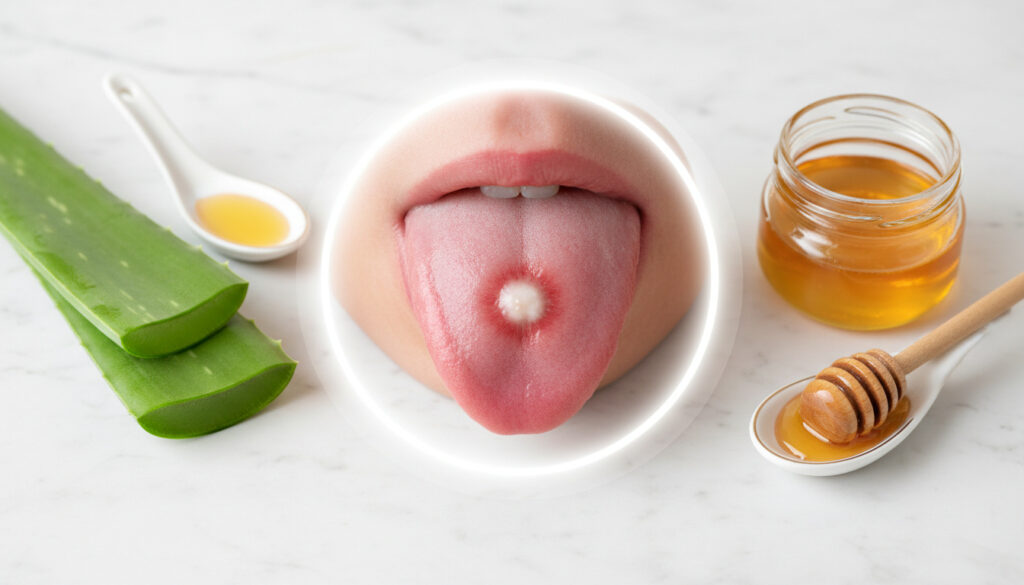
Canker Sore on Tongue – Causes, Treatment and Remedies
Canker sores on the tongue, medically termed aphthous ulcers, represent small, painful lesions that develop on the soft tissues inside the mouth. These non-contagious ulcers typically present as round sores less than 10 millimeters in diameter, featuring a white, yellow, or gray center surrounded by a red, inflamed border. Unlike cold sores caused by the herpes simplex virus, canker sores appear exclusively inside the oral cavity, often on the tongue’s underside or inner cheeks, and generally resolve without medical intervention within one to two weeks.
The distinction between canker sores and cold sores remains clinically significant. While cold sores constitute contagious viral infections appearing as fluid-filled blisters outside the mouth, canker sores remain localized to internal mucosal surfaces and pose no transmission risk to others. Research indicates that these ulcers affect a substantial portion of the population, with recurrence rates varying based on individual susceptibility factors.
Understanding the triggers, appearance, and management options for tongue canker sores enables effective self-care while identifying when professional medical evaluation becomes necessary. The underlying causes, distinguishing visual characteristics, evidence-based treatments, and typical healing trajectories each play a role in managing these oral ulcers effectively.
What Causes Canker Sores on the Tongue?
Small white/gray ulcer with red border
7-14 days
No
High initially, fades during healing
- Non-viral origin: Unlike herpes lesions, canker sores result from local trauma, immune response, or nutritional factors rather than viral infection.
- Physical trauma: Minor mouth injuries from biting, dental work, or abrasive foods frequently initiate ulcer formation.
- Stress correlation: Psychological stress and hormonal changes represent documented triggers in clinical populations.
- Nutritional links: Deficiencies in vitamin B12, iron, and folate correlate with increased incidence.
- Self-limiting nature: Most minor sores heal completely without pharmacological intervention.
- Pain management efficacy: Topical anesthetic gels containing benzocaine or lidocaine provide measurable symptom relief.
| Characteristic | Details |
|---|---|
| Medical Term | Aphthous ulcer |
| Location | Inside mouth (tongue, inner cheeks, gums) |
| Size | Typically < 10 mm diameter |
| Appearance Center | White, yellow, or gray |
| Appearance Border | Red and inflamed |
| Contagious Status | Non-contagious |
| Primary Triggers | Minor injury, stress, nutritional deficiency |
| Typical Duration | 7-14 days (minor), up to 4 weeks (major >10mm) |
| Systemic Associations | Celiac disease, Crohn’s disease |
| Treatment Approach | Symptomatic relief, corticosteroids for severe cases |
Medical authorities acknowledge no single definitive cause for canker sores. According to the National Institute of Dental and Craniofacial Research, minor injuries from toothbrush abrasion or accidental biting frequently precipitate episodes. Cleveland Clinic specialists note that stress-induced immune modulation and hypersensitivity reactions contribute significantly to recurrence patterns. Additionally, Medical News Today reports that underlying gastrointestinal conditions such as celiac disease or inflammatory bowel disease may manifest through recurrent oral ulceration.
What Does a Canker Sore on the Tongue Look Like?
Visual identification of canker sores relies on specific morphological characteristics distinguishing them from other oral lesions. These ulcers manifest as shallow, round or oval depressions with a distinctive color pattern: a central area appearing white, yellow, or grayish, encircled by a pronounced erythematous halo. The surrounding tissue exhibits inflammation without the vesicular formation seen in viral infections.
Visual Characteristics
Clinical descriptions emphasize the dimensional constraints—most minor aphthous ulcers measure less than 10 millimeters in diameter. They typically occur on non-keratinized oral mucosa, including the tongue’s ventral surface, inner lips, buccal mucosa, and soft palate. Multiple sores may appear simultaneously, though single lesions remain common. Unlike traumatic ulcers that conform to the shape of the injuring object, canker sores maintain a regular rounded geometry.
Distinguishing From Cold Sores
The differentiation between canker sores and cold sores carries both diagnostic and treatment implications. GoodRx clinical resources emphasize that cold sores result from herpes simplex virus type 1 and present as clustered, fluid-filled blisters on or around the lips. These lesions crust over during healing and remain highly contagious through direct contact.
Canker sores appear exclusively inside the mouth and never on lip surfaces. Cold sores typically form outside the mouth on the lip vermilion border and are contagious. If the lesion appears inside the mouth as a single shallow ulcer with a white center, it is almost certainly a canker sore rather than herpes.
Orajel product literature confirms that confusing these conditions leads to inappropriate treatment attempts, as antiviral medications effective against cold sores provide no benefit for aphthous ulcers. Colgate oral health resources recommend visual location assessment as the primary diagnostic criterion.
How Do You Get Rid of a Canker Sore on Your Tongue?
Management of tongue canker sores focuses primarily on pain mitigation and inflammation reduction, as the condition resolves spontaneously through natural healing processes. Treatment selection depends on ulcer severity, pain intensity, and interference with oral function.
Over-the-Counter Options
Topical anesthetic preparations containing benzocaine or lidocaine offer immediate, though temporary, pain relief by numbing superficial nerve endings. NIDCR guidelines recommend applying these gels directly to the lesion before meals to facilitate eating. Antiseptic mouth rinses reduce bacterial load and secondary infection risk, while protecting pastes create a mechanical barrier against further irritation.
Home Remedies
Evidence supports several non-pharmacological interventions. Aspen Dental clinicians recommend warm saltwater rinses to reduce inflammation and promote healing. Baking soda paste, applied directly to the ulcer, neutralizes acidity and soothes tissue. Honey possesses antimicrobial properties and may accelerate healing when applied topically. Maintaining adequate levels of essential nutrients supports mucosal health; detailed information appears in our coverage of the Benefits of Vitamin D.
Prescription Interventions
For severe or persistent ulcers exceeding 10 millimeters, healthcare providers may prescribe corticosteroid ointments to suppress local immune response and inflammation. Medical News Today notes that chlorhexidine or tetracycline mouthwashes demonstrate efficacy in reducing bacterial colonization and healing time. Rare cases involving immunosuppression or frequent recurrence may warrant systemic immunomodulatory therapy under specialist supervision.
When Should You See a Doctor for a Canker Sore on the Tongue?
While most tongue canker sores represent benign, self-limiting conditions, specific clinical scenarios necessitate professional evaluation. Persistent lesions, atypical presentations, or associated systemic symptoms may indicate underlying pathology requiring targeted intervention.
Seek immediate medical attention if the sore persists beyond two weeks, exceeds 10 millimeters in diameter, or recurs more than two to three times annually. Additional red flags include accompanying fever, skin rash, eye pain, fatigue, gastrointestinal distress, or lymph node swelling, which may signal autoimmune conditions like Crohn’s disease or celiac syndrome.
Cleveland Clinic physicians emphasize that immunocompromised individuals—those undergoing chemotherapy, living with HIV, or taking immunosuppressive medications—should seek early evaluation for any oral ulceration to prevent secondary infections.
Document the ulcer’s progression through photography to track healing velocity. If the lesion interferes with hydration or nutrition due to pain, or if you notice unusual hardness, elevation, or bleeding, schedule a dental or medical examination promptly to rule out malignant transformation or deep tissue infection.
How Long Do Canker Sores on the Tongue Last?
The temporal progression of tongue canker sores follows a predictable biological sequence, though individual variation exists based on ulcer size, immune function, and intervention measures.
-
Prodromal phase: Subtle burning or tingling sensation precedes visible ulceration. Patient may notice localized tenderness without apparent lesion.
-
Active ulceration: Lesion manifests as defined break in mucosal integrity. Pain intensity peaks as nerve endings become exposed to oral environment and mechanical irritation from tongue movement.
-
Early healing: Granulation tissue forms at ulcer base. Pain gradually diminishes as epithelial cells migrate to cover defect. White/yellow fibrinous coating becomes less prominent.
-
Resolution: Minor sores heal completely with full epithelial coverage without scarring. Major sores exceeding 10 millimeters may require up to four weeks and can leave residual scar tissue.
Orajel clinical summaries confirm this timeline aligns with standard minor aphthous ulcer healing. WebMD medical resources note that interruption of this timeline—particularly extension beyond 14 days—warrants professional assessment.
What Is Known About Canker Sore Development?
Medical understanding of aphthous ulcers encompasses well-established clinical characteristics alongside areas of ongoing investigation.
| Established Facts | Uncertain or Under Investigation |
|---|---|
| Lesions are non-contagious and non-viral in origin | Precise trigger mechanism in cases without obvious trauma |
| Self-limiting resolution occurs within 7-14 days for minor ulcers | Genetic predisposition markers and heritability patterns |
| Association with B12, iron, and folate deficiency | Exact pathway linking specific nutrient deficits to mucosal breakdown |
| Physical trauma initiates many episodes | Role of specific oral microbiome compositions in susceptibility |
| Corticosteroids reduce healing time and pain | Long-term safety of immunomodulatory therapy for chronic sufferers |
Why Do Some People Get Recurrent Canker Sores on the Tongue?
Recurrent aphthous stomatitis affects a subset of the population disproportionately, suggesting individual susceptibility factors beyond random chance. Research indicates that patients with recurrent episodes often demonstrate heightened local immune responses or systemic conditions affecting mucosal integrity.
Dietary triggers play a documented role in recurrence patterns. Acidic foods, spicy preparations, and abrasive textures mechanically or chemically irritate vulnerable mucosa. For individuals sensitive to capsaicin or high-acid content, consuming intense flavors—such as those served at Dave’s Hot Chicken Manchester—may precipitate episodes. Avoiding trigger foods during active healing phases reduces symptom duration.
Systemic associations include celiac disease, inflammatory bowel disease, and Behçet’s syndrome. These conditions create inflammatory environments conducive to oral ulceration. Additionally, sodium lauryl sulfate—a foaming agent in many toothpastes—may disrupt oral mucosa in sensitive individuals, suggesting that hygiene product selection influences recurrence rates.
What Do Clinical Sources Say About Tongue Canker Sores?
Most canker sores heal without treatment in 7 to 14 days.
— Cleveland Clinic
No single cause has been identified for canker sores. However, certain factors such as stress, minor injury to the inside of the mouth, and nutritional deficiencies appear to trigger outbreaks.
— National Institute of Dental and Craniofacial Research
These consensus statements from major medical institutions emphasize the benign nature of most aphthous ulcers while acknowledging the multifactorial etiology complicating prevention strategies.
What Are the Key Facts About Tongue Canker Sores?
Canker sores on the tongue constitute painful but harmless ulcers resolving spontaneously within two weeks. They differ fundamentally from contagious cold sores through their internal location and non-viral origin. While stress, minor injuries, and nutritional deficiencies commonly trigger episodes, most cases respond to simple home remedies like saltwater rinses and protective gels. Persistent, unusually large, or frequently recurring lesions require medical evaluation to exclude underlying systemic conditions such as celiac disease or immunological disorders.
Frequently Asked Questions
Are canker sores on the tongue contagious?
No. Canker sores are non-contagious aphthous ulcers resulting from local trauma, stress, or immune factors, not viral infection. They cannot spread through kissing, sharing utensils, or saliva contact.
What foods cause canker sores on the tongue?
Acidic foods (citrus, tomatoes), spicy dishes, and abrasive textures (chips, toast) may trigger sores in susceptible individuals. Specific triggers vary by person.
Can canker sores on the tongue be caused by stress?
Yes. Psychological stress modulates immune function and increases susceptibility. Stress management techniques may reduce recurrence frequency.
Why do I keep getting canker sores on my tongue?
Recurrence suggests underlying factors such as nutritional deficiencies (B12, iron, folate), food sensitivities, mechanical irritation, or systemic conditions like celiac disease.
Do canker sores on the tongue go away on their own?
Yes. Most minor sores heal completely within 7 to 14 days without medical treatment, though pain relief measures improve comfort during healing.
Can I pop a canker sore on my tongue?
No. Attempting to pop the sore increases pain, bleeding risk, and infection potential. The lesion lacks fluid contents; it is a tissue defect, not a blister.
More related posts
 Can Dogs Eat Popcorn – Full Safety Guide for Dog Owners
 Farrow and Ball Colours – Complete Guide to Shades and 2025 New Colours
 How Many Days Until 2026 – Plan Your New Year Countdown
 EasyJet Customer Service Number Free 0800 – Official Numbers and Tips
 Criminal Minds Season 18 – Release Date Cast Episodes Guide
 Google Find My Device – Locate Your Lost Android Phone Fast
 Guillermo Del Toro – Biography, Best Movies and Upcoming Projects
 US 10 Year Bond Yield – What Investors Must Know Today