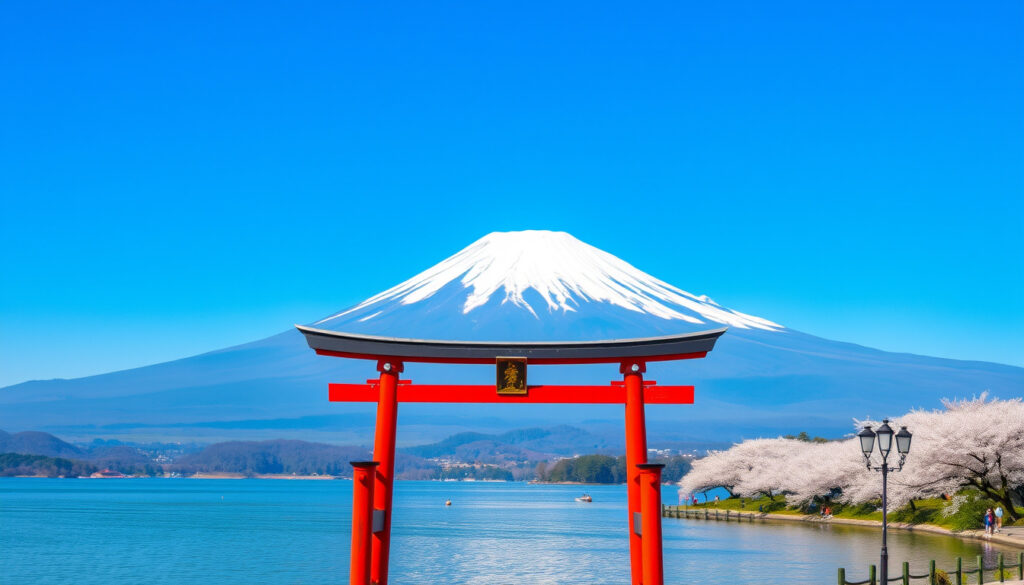
Mount Fuji – Complete Guide to Japan’s Highest Peak
Mount Fuji is Japan’s most iconic natural landmark, a nearly perfect stratovolcano that has inspired artists, pilgrims, and travelers for centuries. This guide covers everything you need to know before you go.
How Tall is Mount Fuji and Where is it Located?
| Height | 3,776 m (12,388 ft) |
|---|---|
| Volcano Status | Active (last eruption 1707) |
| Location | Yamanashi & Shizuoka, Japan |
| Climbing Season | July – early September |
- Mount Fuji is Japan’s tallest peak and a UNESCO World Heritage site, attracting over 300,000 climbers annually.
- Despite its active volcano status, the last eruption was in 1707; current monitoring shows no imminent threat.
- The easiest way to visit from Tokyo is by direct highway bus (2–2.5 hours) or train via Shinjuku or Tokyo Station.
- Climbing Mount Fuji requires preparation; altitude sickness and weather changes are the primary risks.
- The mountain holds deep cultural significance as a symbol of Japan, depicted in ukiyo-e art and religious pilgrimage.
| Fact | Detail |
|---|---|
| Height | 3,776 meters (12,388 feet) |
| First Ascent | 663 AD (legend) or 1600s (documented) |
| Last Eruption | December 16, 1707 (Hōei eruption) |
| Volcano Type | Active stratovolcano |
| Location | Honshu, Japan; 100 km SW of Tokyo |
| Climbing Season | July 1 – September 10 (official) |
| Annual Climbers | ~300,000 (pre-COVID) |
| UNESCO Listing | 2013 as Cultural Site |
Mount Fuji Height in Meters and Feet
Mount Fuji stands at 3,776.24 meters, or 12,389 feet and 3 inches. According to Wikipedia and Britannica, it is Japan’s highest mountain. The measurement comes from modern surveying and is consistent across official sources.
Geographic Location: Yamanashi and Shizuoka Prefectures
The volcano lies about 100 kilometers west of the Tokyo-Yokohama area, spanning the prefectures of Yamanashi and Shizuoka. Britannica notes that this position makes it a major day-trip or overnight destination from the capital. The mountain is the centerpiece of Fuji-Hakone-Izu National Park, a protected area that draws millions of visitors each year.
Fuji-Hakone-Izu National Park Status
The park was established in 1936 and encompasses not only Fuji but also the surrounding lakes, hot springs, and coastal areas. It is one of Japan’s most visited national parks, offering hiking, sightseeing, and cultural attractions.
Is Mount Fuji an Active Volcano and When Did It Last Erupt?
Mount Fuji is classified as an active stratovolcano, according to the Smithsonian Institution’s Global Volcanism Program. While it has been dormant since the Hōei eruption of 1707–1708, geologists continue to monitor it because of the potential scale of damage a future eruption could cause. The last signs of volcanic activity were recorded in the 1960s, per Britannica.
The Japan Meteorological Agency maintains constant surveillance of seismic activity around Mount Fuji. As of 2025, no immediate eruption is forecast, but the mountain remains under observation due to its proximity to the Tokyo metropolitan area.
Volcanic Status: Active but Low Risk
The mountain has erupted more than 15 times since 781 AD, with many events recorded during the Heian period. Despite this history, the current volcanic alert level is low. The probability of a major eruption in the next 30 years is estimated at less than 1% by some studies, though such estimates carry inherent uncertainty.
The Last Eruption: December 16, 1707 (Hōei Eruption)
The most recent confirmed eruption began on December 16, 1707 and lasted into early January 1708. It was a phreatic and ash eruption that sent ash as far as Edo, modern-day Tokyo. No lava flow occurred, but the ashfall caused widespread disruption. Historical records from the time describe the sky darkening and crops being buried.
Historical Eruption Timeline
Written records document eruptions as early as 781 AD. Major events include an eruption in 864 AD, after which local religious traditions evolved to incorporate volcanic danger. Prehistoric eruptions, such as those around 1050 and 930 BC, are known from geological evidence. The 1707 eruption remains the last.
How Do You Get to Mount Fuji from Tokyo?
The mountain lies roughly 100 km southwest of central Tokyo, making it a convenient excursion. Several transport options connect the capital to the Fuji Five Lakes area and the climbing trailheads.
Highway buses from Shinjuku to Kawaguchiko are popular and often sell out, especially during climbing season and autumn foliage periods. Reserve seats online or at a bus office at least a few days in advance.
By Bus: Direct Highway Buses from Shinjuku
Direct highway buses depart from Shinjuku Station and reach Kawaguchiko Station in about 2–2.5 hours. Several companies operate the route, with fares typically ranging from ¥2,000 to ¥3,000 one way. Buses also run to other Fuji Five Lakes destinations and to the fifth station climbing trailheads during the official season.
By Train: JR Tokaido Line, Shinkansen, and Fujikyuko Railway
Travelers can take the JR Tokaido Line to Gotemba or the Shinkansen to Mishima, then transfer to local buses or the Fujikyuko Railway. The journey usually takes 2–3 hours, depending on connections. The Fujikyuko line from Otsuki to Kawaguchiko offers scenic views along the way.
Driving and Car Rentals
Driving from Tokyo takes about 1.5–2 hours via the Tomei Expressway. Rental cars are available at major stations, but parking near trailheads can be limited during peak season. Tolls and fuel should be factored into the cost.
Tours and Guided Packages
Many tour operators offer day trips that combine round-trip bus transport from Tokyo with a guide. These packages can simplify logistics, especially for first-time visitors who want to see the mountain without arranging their own transport. Prices vary but often include lunch and entry fees.
Can You Climb Mount Fuji? A Complete Climbing Guide
Yes, Mount Fuji is climbable, but only during the official season when trails and facilities are open. Each year, approximately 300,000 people make the ascent, according to pre-pandemic estimates. The climb is not technically difficult but requires physical preparation and awareness of altitude risks.
The summit is above 3,700 meters, and altitude sickness is a real concern. Symptoms include headache, nausea, and dizziness. Ascending slowly, staying hydrated, and resting at mountain huts can mitigate the risk.
Climbing Season: July to Early September
The official climbing season runs from July 1 to September 10. During winter, the trails are closed due to snow and severe weather. Even within the season, conditions can change rapidly; checking the official Mt. Fuji climbing website for current trail status is essential.
Popular Routes: Yoshida, Subashiri, Gotemba, Fujinomiya
Four main routes lead to the summit: Yoshida (most popular, from the north), Subashiri, Gotemba (longest), and Fujinomiya (shortest but steepest). Each trailhead is accessible from different Fifth Station points. The Yoshida route is recommended for beginners because it has many mountain huts and a well-marked path.
Average Climbing Time and Difficulty
Most climbers take 5–7 hours to ascend and 3–4 hours to descend. The total elevation gain from the Fifth Station is about 1,500 meters. Many people choose an overnight itinerary, starting in the afternoon, staying at a hut, and reaching the summit for sunrise. The descent is easier on the knees if done via loose volcanic gravel trails.
Safety Tips and Altitude Sickness
Weather changes quickly; bring layers, rain gear, and a headlamp. Altitude sickness can affect anyone regardless of fitness; the best prevention is a gradual ascent and adequate rest. It is also wise to carry enough water and snacks, as supplies at huts are expensive. Falls on loose rocks are another common hazard.
Permits and Costs (2025 Update)
There is no official permit fee, but a voluntary conservation contribution of ¥1,000 is requested. Bus transport from Kawaguchiko to the Fifth Station costs around ¥2,500 round trip. Overnight stays in mountain huts range from ¥5,000 to ¥10,000 per person, including a meal. Overall, a budget of ¥10,000–¥20,000 covers basic costs for a solo climber.
What is the Cultural Significance of Mount Fuji?
Mount Fuji is far more than a geological landmark. Britannica describes it as Japan’s “sacred symbol,” a role that predates modern tourism. Its near-perfect cone has inspired centuries of art, religion, and national identity.
Mount Fuji in Art: Hokusai and Hiroshige
The mountain is most famous in ukiyo-e woodblock prints, particularly Katsushika Hokusai’s *Thirty-six Views of Mount Fuji* and Utagawa Hiroshige’s *Fifty-three Stations of the Tōkaidō*. These works spread the image of Fuji worldwide and cemented its place as an artistic icon. UNESCO’s 2013 inscription cites the mountain as a “source of artistic inspiration.”
Religious Importance: Shinto and Buddhist Pilgrimages
For centuries, climbing Mount Fuji was a religious practice. Shinto shrines and Buddhist temples are located around and on the volcano. The mountain is considered a sacred deity in Shinto, and ascents were traditionally acts of devotion. Even today, some climbers begin their journey with a purification ritual at a shrine.
UNESCO World Heritage Site (2013)
In 2013, UNESCO designated *Fujisan, sacred place and source of artistic inspiration* as a World Heritage Cultural Site. The listing recognizes the mountain’s profound influence on Japanese culture, from religious pilgrimage to artistic expression. It joined other iconic landscapes on the World Heritage list, ensuring its protection for future generations.
What is the History and Eruption Timeline of Mount Fuji?
- ca. 100,000 years ago: Volcanic activity begins, forming Komitake volcano (ancient Fuji).
(Source: Wikipedia) - ca. 10,000 years ago: New Fuji (Shin-Fuji) emerges on top of older volcanic layers.
(Source: Wikipedia) - 663 AD: Legendary first ascent by a monk; no physical evidence.
(Source: Wikipedia) - 800–1707: Multiple eruptions recorded, including major events in 864 and 1707.
(Sources: Britannica, YouTube documentary) - 1707: Last eruption (Hōei); ash reaches Edo (Tokyo). No lava flow.
(Sources: Wikipedia – Historic eruptions, Britannica) - 1872: First modern documented ascent by foreign traveler (Sir Rutherford Alcock).
(Source: Wikipedia) - 1936: Fuji-Hakone-Izu National Park established.
(Source: Britannica) - 2013: Designated a UNESCO World Heritage Site (Cultural).
(Source: UNESCO) - 2024–2025: Continued monitoring; climbing season returns to normal after pandemic restrictions.
(Source: official site)
What is Known and What Remains Uncertain About Mount Fuji?
| Established Information | Information That Remains Unclear |
|---|---|
| Mount Fuji’s height is 3,776 meters (surveyed). | The exact date of the next eruption is unknown; current forecasts are probabilistic. |
| The last eruption was in 1707 and was a phreatic/ash eruption. | Some legends claim earlier climbs, but no solid archaeological evidence. |
| It is an active stratovolcano with frequent small earthquakes. | The exact number of annual climbers varies; 300,000 is a pre-pandemic estimate. |
| The official climbing season is July to early September. | Climate change may affect climbing season timing and trail conditions in future years. |
| It is located in Yamanashi and Shizuoka prefectures. | — |
| It is a UNESCO World Heritage site. | — |
Why Does Mount Fuji Matter Beyond Its Size?
Mount Fuji is not only Japan’s highest peak but also a symbol of national identity and natural beauty. Its geological history as an active volcano underpins its majestic cone shape, while its cultural importance spans centuries of art, religion, and tourism. For travelers, Mount Fuji offers both a challenging climb and a serene backdrop for sightseeing. The key to enjoying the mountain safely lies in understanding the short climbing season, preparing for altitude changes, and respecting the environment. Volcanic monitoring by the Japan Meteorological Agency indicates low immediate risk, but the mountain remains under constant observation. For those unable to climb, day trips from Tokyo to the Fuji Five Lakes area provide spectacular views without the physical exertion.
Where Can You Find Reliable Information About Mount Fuji?
Several authoritative sources provide verified facts about the mountain. The quotes below come from official tourism bodies and encyclopedias.
“Standing at 3,776 meters, Mt. Fuji is the tallest peak in Japan, the result of volcanic activity that began approximately 100,000 years ago.”
— Japan National Tourism Organization (www.japan.travel)
“Mount Fuji, highest mountain in Japan. It rises to 12,388 feet (3,776 meters) near the Pacific Ocean coast in Yamanashi and Shizuoka ken.”
— Encyclopædia Britannica (www.britannica.com)
“Mount Fuji is an isolated peak exceeding 3,000 meters in elevation. While it boasts a breathtakingly beautiful appearance, it also possesses a rugged nature.”
— Official Mt. Fuji Climbing Website (www.fujisan-climb.jp)
What is the Key Takeaway About Mount Fuji?
Mount Fuji remains one of the world’s most iconic natural landmarks, combining volcanic power, cultural depth, and accessible adventure. Whether you plan to climb its slopes or admire its profile from a distance, understanding its height, history, and hazards is essential for a safe and meaningful experience. For more travel inspiration, see our guide on Best Places to Watch Whales – Complete Global Guide for 2025 and Longest Flight in the World – 2025 Top 10 List and Records.
Frequently Asked Questions About Mount Fuji
How far is Mount Fuji from Tokyo?
Mount Fuji is about 100 km southwest of Tokyo. Direct bus takes approximately 2–2.5 hours; train takes 2–3 hours depending on route.
Can you see Mount Fuji from Tokyo?
Yes, on clear days Mount Fuji can be seen from tall buildings like Tokyo Skytree or from western suburbs such as Shibuya Sky. It is often visible in winter months.
Is Mount Fuji a national park?
Yes, it is part of Fuji-Hakone-Izu National Park.
How long does it take to climb Mount Fuji?
Most climbers take 5–7 hours to ascend and 3–4 hours to descend. Many do an overnight climb to watch the sunrise.
Is climbing Mount Fuji dangerous?
While not technically difficult, risks include altitude sickness, hypothermia, and falls. Proper preparation and gear are essential.
What is the cost of climbing Mount Fuji?
There is a voluntary conservation fee (¥1,000). Bus transportation to trailhead costs about ¥2,500–3,000. Accommodation in mountain huts is extra (¥5,000–10,000 per night).
When was Mount Fuji last erupted?
The last confirmed eruption was on December 16, 1707 (Hōei eruption). It deposited ash as far as Edo (now Tokyo).
Is Mount Fuji likely to erupt again soon?
Seismic activity is monitored, but no immediate eruption is forecast. The probability of a major eruption in the next 30 years is estimated at less than 1% by some studies.
More related posts
 Beverly Hills Cop 4 – Netflix Streaming, Cast and Release Guide
 Caravan Storage Near Me – Secure UK Facilities and Costs
 Countrie Beginning with A – All 11 Nation at a Glance
 Red Dog Saloon Soho – Menu Reviews Halal Eating Challenge Guide
 NCIS Tony and Ziva – Guide to Episodes Cast Streaming After Cancellation
 How Many Days Until 2026 – Plan Your New Year Countdown
 Lewis Capaldi Tour 2025 – UK Dates Fully Sold Out
 Leicester City Transfer News – No Deals, Key Rumours