Where Are Your Kidneys Located – Anatomy, Pain and Gender Differences
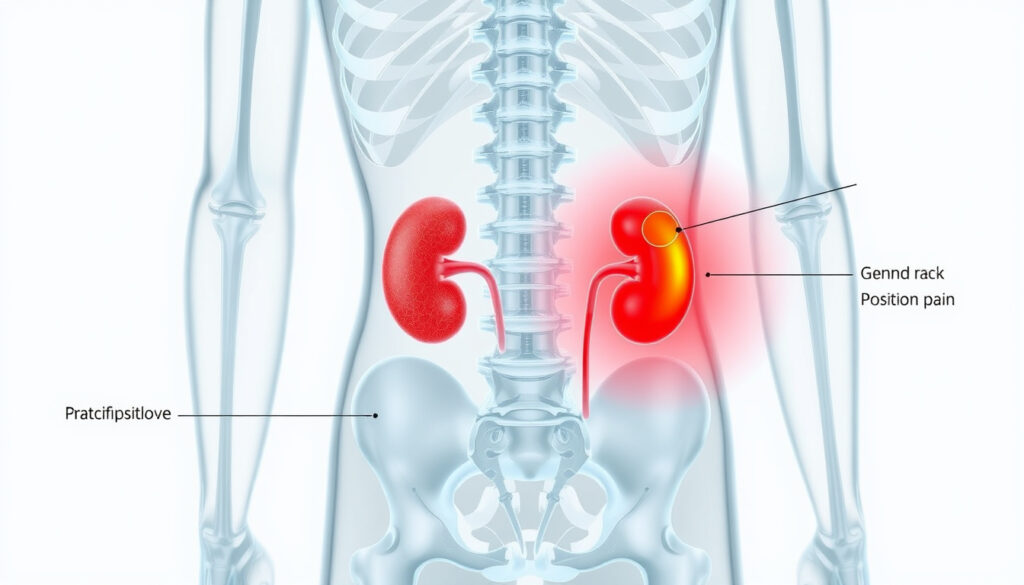
Your kidneys are located high in the back of your upper abdomen, one on each side of your spine, just below the rib cage. This position places them deep in the body, behind the abdominal organs, and explains why kidney pain is typically felt in the flanks rather than the lower back.
Because the kidneys sit in a fixed retroperitoneal space, their basic position is the same in both men and women. The right kidney sits slightly lower than the left due to the liver above it. During pregnancy, the growing uterus can push the kidneys upward and outward, but the general location remains consistent.
Understanding exactly where your kidneys are located is helpful for distinguishing kidney pain from ordinary back pain. The kidneys are bean-shaped organs, about the size of a fist (10–12 cm long). Most people have two, though some have only one due to surgery or a congenital condition. Their position in the flank area—between the ribs and hips—is a key anatomical landmark.
Where Are Your Kidneys Located?
Both kidneys lie below the rib cage, one on each side of the spine, deep in the abdomen.
Same basic position as males; however, pain perception may differ due to pelvic anatomy. Often felt in the lower back or flank.
Identical anatomical position to females. No structural difference.
Kidneys shift slightly upward and outward as the uterus expands, but remain posterior. Pain may radiate differently.
- Kidneys are located just below the rib cage, one on each side of the spine, in the lower back area.
- The right kidney is typically slightly lower than the left because of the liver’s position.
- Anatomical location is identical in men and women; differences in pain symptoms arise from other factors (ureter length, pelvic anatomy).
- During pregnancy, the growing uterus pushes kidneys upward and outward, altering pain referral patterns.
- Distinguishing kidney pain from muscle strain requires noting location (flank vs central back) and accompanying symptoms (fever, urination changes).
| Fact | Detail |
|---|---|
| Number of kidneys | 2 (most people) |
| Size | About the size of a fist (10–12 cm long) |
| Shape | Bean-shaped |
| General location | Lower back, just below rib cage, one on each side of the spine |
| Right kidney relative to left | Sits slightly lower due to the liver |
| Pain referral area | Flank (side of back), may radiate to lower abdomen or groin |
| Gender difference in location | None – structurally identical |
| Pregnancy shift | Kidneys move upward and outward in later stages |
How Does Kidney Location Differ for Women?
Many people ask whether female anatomy changes where the kidneys sit. The answer is straightforward: the basic kidney position is the same in females and males. Both sexes usually have two kidneys in the same general retroperitoneal location, as confirmed by urology sources. However, the way kidney pain is experienced can differ due to pelvic anatomy, pregnancy, and hormonal factors.
Where Are Kidneys Located on the Back in Women?
In women, the kidneys are located on the back just below the rib cage, on either side of the spine—exactly as in men. The right kidney sits slightly lower because of the liver. Research has identified biological differences at the tissue and cell level between male and female kidneys, but these findings do not change the standard surface anatomy used to locate the kidneys on the body.
Where Do Women Feel Kidney Pain?
Kidney pain in women is usually felt in the flank area, under the ribs, and may radiate to the lower abdomen or groin. Because women have additional pelvic organs, conditions such as ovarian cysts or endometriosis can sometimes mimic or overlap with kidney pain. The key is that kidney pain itself is not felt in a different location—only the clinical context can vary. If a woman is pregnant, the kidneys may shift and pain can be referred differently.
The kidneys sit on the posterior abdominal wall, roughly from T12 to L3 vertebral levels. The right kidney is often slightly lower. This is true regardless of sex.
Where Are Kidneys Located in Men?
Men’s kidneys occupy the same anatomical position as women’s. There is no structural difference in kidney location between sexes. The kidneys are located just below the rib cage, one on each side of the spine, deep in the abdomen. Leading health organizations, such as the Cleveland Clinic, confirm this consistent anatomy.
Is Kidney Location Different in Men?
No. The location is identical. The main sex-related differences are not the kidney’s resting location but the clinical context: abdominal, pelvic, urinary, or reproductive symptoms may make pain feel different or be interpreted differently depending on anatomy.
What About Pain in Men?
Kidney pain in men—whether from stones, infection, or other causes—presents in the same flank area. However, men may be more likely to report pain radiating to the groin due to the longer ureter and higher incidence of kidney stones. The location of the kidney itself does not change.
Where Are Your Kidneys During Pregnancy?
Pregnancy brings temporary changes to the kidneys and urinary tract. While the kidneys do not dramatically move, they become larger and may shift slightly upward and outward as the uterus expands. Physiologic hydronephrosis (dilation of the kidney collecting system) is common, especially on the right side—reported in up to 86% of pregnant women.
How Does the Uterus Affect Kidney Position?
The growing uterus pushes the kidneys upward and outward, but they remain in the posterior abdomen. This shift can alter pain referral patterns, making flank pain in pregnancy more challenging to evaluate. Because pregnancy changes the urinary tract and abdomen, flank pain deserves careful evaluation, as it may reflect normal physiologic change or a urinary problem rather than simple musculoskeletal back pain.
Why Is Right-Side Kidney Dilation More Common?
Pregnancy-related dilation of the kidney collecting system occurs more often on the right side, with a right-sided predominance in up to 86% of cases. This is thought to be due to compression of the right ureter by the gravid uterus and the right ovarian vein. After delivery, the kidneys gradually return to their original position, and the dilation resolves in most women.
If you experience flank pain during pregnancy, it is important to discuss it with your obstetrician. The pain could be from the kidneys (due to hydronephrosis or infection) or from musculoskeletal causes.
How to Identify Kidney Pain Location vs. Back Pain?
Distinguishing kidney pain from ordinary back pain is one of the most common reasons people search for kidney location information. Pain location alone cannot diagnose the cause, but there are useful clues.
What Are the Key Differences?
Kidney pain is deeper, often constant, and usually not strongly affected by movement. It may be associated with urinary symptoms, fever, nausea, or vomiting. Back pain, on the other hand, is often linked to muscle strain, posture, lifting, or spinal issues, and it commonly worsens with movement or certain positions. Kidney stones can cause severe flank pain that may come in waves and spread toward the groin.
Where Is Kidney Pain Felt?
Kidney pain is usually felt under the ribs, on one or both sides of the spine, often in the flank. It may radiate to the abdomen or groin. A clinician may check for costovertebral angle tenderness (tenderness where the ribs meet the spine) when kidney pain is suspected.
Where Is Back Pain Felt?
Back pain is more often felt in the lower back or along the spine, and it commonly changes with bending, lifting, twisting, or resting position. If pain is low in the back, moves with activity, or feels muscular, it is more likely ordinary back pain.
What Accompanying Symptoms Matter?
If pain is accompanied by fever, chills, nausea, vomiting, or changes in urination (burning, frequency, blood), kidney infection or stones are more likely. Kidney infections, stones, muscle strain, spinal problems, gallbladder disease, and pregnancy-related urinary changes can overlap in how they feel, so associated symptoms matter.
Pain location alone cannot diagnose the cause. Always consult a healthcare provider for an accurate diagnosis if you have unexplained back or flank pain.
How Do Kidneys Shift During Pregnancy and Return After Birth?
While adult kidney position is otherwise fixed, pregnancy introduces a temporary sequence of changes. Here is the timeline based on medical sources, including data from the National Institute of Diabetes and Digestive and Kidney Diseases:
- First trimester (weeks 1-12): The kidneys remain in their normal position. The uterus is still small, so no significant displacement occurs.
- Second trimester (weeks 13-27): As the uterus enlarges, the kidneys begin to shift slightly upward and outward. Physiologic hydronephrosis may start, more often on the right side.
- Third trimester (weeks 28-40): Maximum displacement and dilation. The kidneys can become larger, and right-sided hydronephrosis is present in up to 86% of pregnant women.
- After delivery (postpartum): Within a few weeks, the kidneys gradually return to their original position and size. Hydronephrosis resolves in most cases.
- Long-term: For most women, kidney position returns to baseline with no lasting changes.
What Do We Know for Certain About Kidney Location—and What Remains Uncertain?
| Established Information | Information That Remains Unclear or Misunderstood |
|---|---|
| Kidneys are located just below the rib cage, one on each side of the spine. | Myth: Kidneys are in the middle of the lower back. (Reality: They are on the sides, in the flank area.) |
| The right kidney is slightly lower than the left due to the liver. | Uncertainty: Some people have only one kidney (congenital or surgical) – location is similar but may compensate by enlarging. |
| Location is the same in men and women. | Myth: Kidney pain is always in the back. (Reality: It can also radiate to the front or groin.) |
| During late pregnancy, the kidneys shift temporarily. | Uncertainty: Exact kidney position can vary slightly between individuals due to body shape and organ placement. |
Why Is Knowing Your Kidney Location Important?
Understanding kidney location is critical for differentiating renal pain from other causes. Many back pain complaints are actually musculoskeletal, but kidney infections or stones present with flank pain. Women may report pain differently due to concurrent pelvic conditions such as ovarian cysts. During pregnancy, the gravid uterus can compress the ureters, increasing infection risk and altering pain perception. Medical sources emphasize that kidney location is constant, but referral patterns vary.
The most reliable way to locate your own kidneys is to feel the bottom of your rib cage at the back; the kidneys lie just below this, on either side of the spine. If you experience pain high on the back under the ribs, especially on one side, the kidneys are a possibility. If the pain is low in the back and moves with activity, it is more likely ordinary back pain.
Accurate knowledge of kidney location helps you communicate more effectively with your healthcare provider. For example, describing pain as “flank pain” rather than “back pain” can guide diagnostic thinking.
What Do Leading Health Organizations Say About Kidney Location?
Several authoritative sources provide consistent descriptions of kidney location:
“Your kidneys sit just below your rib cage and in your lower back. Typically, one kidney sits on either side of your spine.” – Cleveland Clinic
Cleveland Clinic – Kidneys: Location, Anatomy, Function & Health
“The kidneys are two bean-shaped organs, each about the size of a fist. They are located just below the rib cage, one on each side of your spine.” – NIDDK (NIH)
“Most people have two kidneys, which sit deep in the abdomen (behind the liver and intestines) in the small of the back.” – Kidney Research UK
Other reputable sources, including the American Kidney Fund and the UK’s Tena, echo the same anatomical description. These organizations rely on decades of medical research and anatomical studies.
Key Takeaways on Kidney Location
Your kidneys are located just below the rib cage, one on each side of the spine, in the flank area. The right kidney sits slightly lower due to the liver. This location is identical in men and women, though pregnancy temporarily shifts the kidneys upward and outward. Kidney pain is typically felt deep in the flank, while back pain is more often central and movement-sensitive. If you are uncertain about your symptoms, consult a healthcare provider. For more health tips, see How to Stop Feeling Sick – Fast Home Remedies That Work.
Frequently Asked Questions About Kidney Location
Can kidney location vary between people?
Yes, slight variations exist due to body size and organ placement, but the general position is consistent. Some people are born with one kidney or have a horseshoe kidney.
What side is the right kidney on?
The right kidney is on the right side of your body, slightly lower than the left because of the liver sitting above it.
Is kidney pain felt in the front or back?
Kidney pain is usually felt in the back (flank) but can radiate to the lower front abdomen or groin, especially with stones.
Do kidneys move during breathing?
Yes, kidneys move slightly with the diaphragm during deep breathing, but they remain in the same general region.
Is there any difference in kidney location between men and women?
No, the anatomical location is identical. Differences in pain perception arise from other factors such as pelvic anatomy and pregnancy.
How can I find my own kidney location?
Place your hands on your lower back, just below the rib cage, on either side of the spine. That is the area where your kidneys are located.
Can kidney pain be felt only on one side?
Yes, kidney pain can be felt on one side (e.g., right kidney pain) or both sides, depending on the cause.
What does kidney pain feel like compared to muscle pain?
Kidney pain is deeper, more constant, and often not affected by movement. Muscle back pain usually changes with position or activity.
Are there any permanent changes to kidney location after pregnancy?
No, the kidneys gradually return to their original position after childbirth. Temporary enlargement and dilation resolve postpartum.
What should I do if I suspect kidney pain?
Consult a healthcare provider for proper evaluation. They can check for costovertebral angle tenderness and order urine or imaging tests if needed.
More related posts
 Valentino Born in Roma – Complete Guide to All Four Variants
 Sunderland vs West Ham – Full Head-to-Head Guide and Results
 Cast of Call the Midwife – Complete Guide All Seasons
 Is Palworld Cross Platform – Complete Crossplay Guide 2025
 Pound to Indian Rupee – Live Rate, Forecast and Transfer Guide
 Best Credit Card UK – Top 10 Recommendations for 2026
 Miquita Oliver – Bio, Career, and the Tsunami Survival Story
 Sheffield Wednesday vs Hull City – H2H Record & Prediction